qPCR Kits: GoTaq® qPCR and RT-qPCR Systems
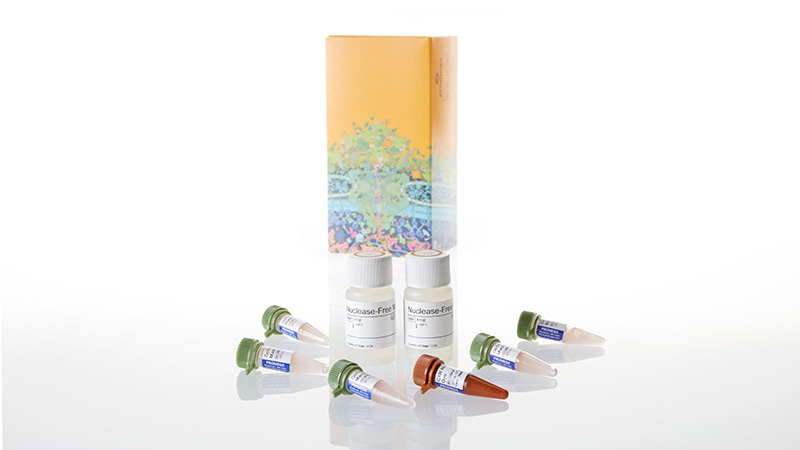
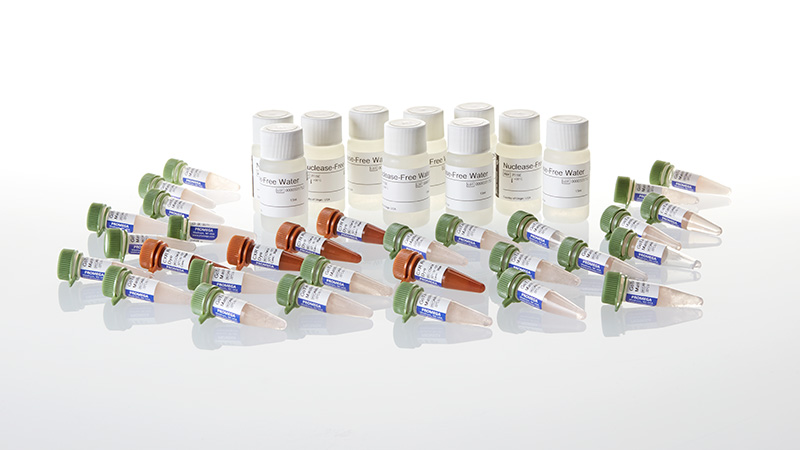
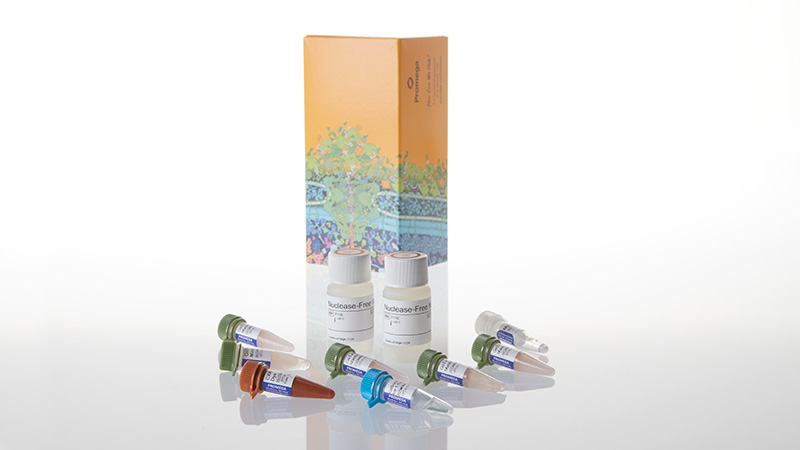
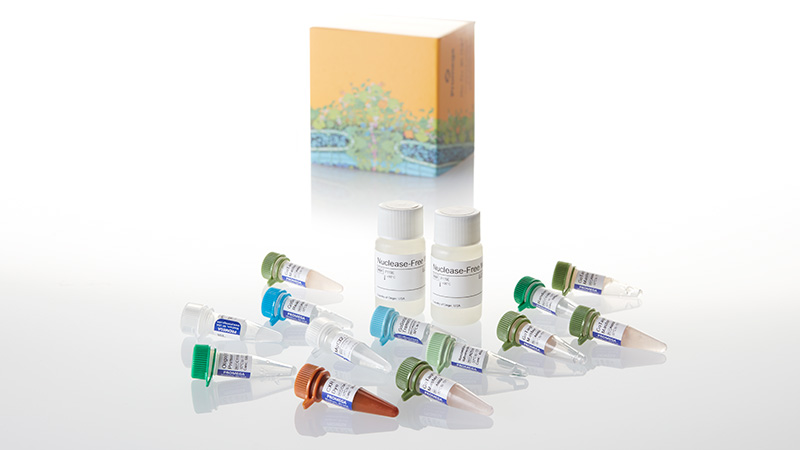

Convenient Master Mixes for Real-Time qPCR and RT-qPCR
- GoTaq® Systems use BRYT Green® Dye for sensitive, accurate real-time PCR
- BRYT Green® Dye has spectral properties similar to SYBR® Green I and provides greater fluorescence enhancement
- Three workflow formats (qPCR, 1-Step RT-qPCR and 2-Step RT-qPCR) offer maximum flexibility
- All formats enable room temperature setup, standard or fast cycling, and resistance to a wide range of PCR inhibitors
Catalog Number:
Choose a system
Size
Catalog Number: A6001
Catalog Number: A6002
Catalog Number: A6020
Catalog Number: A6010
What Are GoTaq® qPCR and RT-qPCR Systems?
GoTaq® qPCR and RT-qPCR Systems contain ready-to-use 2X master mix formulations for quantitative real-time PCR of DNA and RNA templates, respectively. The kits include GoTaq® Hot Start Polymerase, BRYT Green® Dye, MgCl₂, dNTPs, and CXR reference dye. Three formats are available: qPCR-only (DNA templates), 1-step RT-qPCR (RNA templates, single- tube reaction), and 2-step RT-qPCR (RNA templates, separate reverse transcription for maximum flexibility).
GoTaq® qPCR Systems are built around GoTaq® Hot Start Polymerase, which is activated during initial denaturaton at 95°C for 2 minutes. This hot-start approach enables room-temperature reaction setup while suppressing nonspecific amplification from misprimed products and primer-dimers. All dye-based GoTaq® qPCR Systems incorporate the proprietary BRYT Green® Dye for real-time fluorescence detection. Because BRYT Green® Dye has similar spectral characteristics to SYBR® Green I, it is compatible with existing SYBR® Green instrument channel settings. The kits are suitable for both standard and fast cycling protocols.
How Does BRYT Green® Dye Compare to SYBR® Green I?
BRYT Green® Dye delivers greater fluorescence enhancement upon binding to double-stranded DNA than SYBR® Green I. Both dyes have similar spectral properties, so no instrument reconfiguration is required. The stronger signal from BRYT Green® improves detection sensitivity for low-abundance targets.
BRYT Green® Dye is a proprietary dsDNA-intercalating fluorescent dye included in GoTaq® qPCR Master Mix (Cat.# A6001, A6002), GoTaq® 1-Step RT-qPCR System (Cat.# A6020), and GoTaq® 2-Step RT-qPCR System (Cat.# A6010). Like SYBR® Green I, it binds all double-stranded DNA and releases enhanced fluorescence proportional to the amount of dsDNA present during amplification. Because BRYT Green® is a non-sequence-specific dye, a melt-curve analysis step after cycling is recommended to confirm the identity of the amplified product and rule out primer dimers or nonspecific amplification. This distinguishes dye-based from probe-based qPCR, where sequence specificity is inherent in the probe design.
What Is the Difference between Dye-Based and Probe-Based qPCR?
Dye-based qPCR (BRYT Green®/SYBR® Green) uses an intercalating dye that fluoresces with any double-stranded DNA—simple, low-cost, and flexible, but requires melt-curve validation. Probe-based qPCR (e.g., GoTaq® Probe) uses a sequence-specific hydrolysis probe, providing inherently higher specificity, enabling multiplexing, and eliminating the need for melt-curve confirmation.
How Do I Choose the Best qPCR or RT-qPCR Kit for My Experiments?
You can learn more about each GoTaq® System by reviewing the application data below:
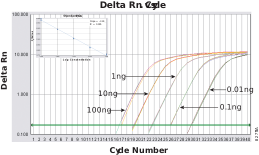
Sensitivity and Specificity for qPCR
The GoTaq® qPCR Master Mix is a ready-to-use 2X master mix for real-time quantitative PCR. Combining GoTaq® Hot Start Polymerase, optimized buffer and the BRYT Green® Dye, the GoTaq® qPCR Master Mix provides robust real-time PCR with earlier quantification cycle values and broad-range detection. These qualities result in increased reliability, reproducibility and sensitivity for quantitative, real-time PCR.
Designed for use with any instrument capable of reading SYBR® Green I or FAM™ Dye, the GoTaq® qPCR Master Mix offers:
- Sensitive detection for earlier quantitation of low- and high-copy targets.
- Room-temperature setup,making it suitable for automation and high-throughput detection.
- Compatibility with both fast and standard qPCR cycling methods.
| Cat.# | Size | 10µl Reactions | 20µl Reactions |
|---|---|---|---|
| A6001 | 5ml | 1,000 reactions | 500 reactions |
| A6002 | 25ml | 5,000 reactions | 2,500 reactions |
Reverse Transcription and qPCR in One Reaction
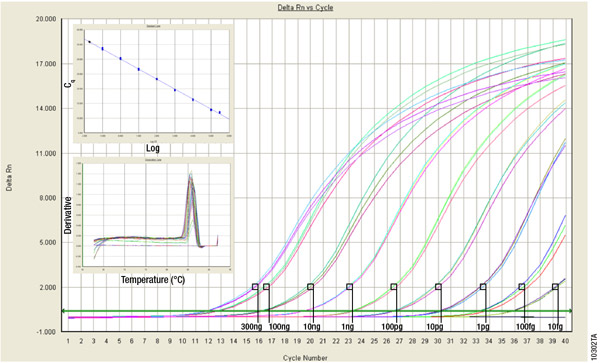
The GoTaq® 1-Step RT-qPCR System enables detection and relative quantification of RNA expression levels using a one-step real-time RT-qPCR method, combining GoScript™ Reverse Transcriptase and GoTaq® qPCR Master Mix in a single reaction well. The GoScript™ RT Mix for 1-Step RT-qPCR (50X) combines optimized quantities amounts of GoScript™ Reverse Transcriptase, RNasin® Plus RNase Inhibitor and additives to enhance single-step reactions.
Other features provided by the 1-Step System include:
- Sensitive detection for earlier quantitation of low- and high-copy-number targets over a broad dynamic range. Detects down to femtogram (fg) amounts of input RNA.
- Exceptional room-temperature setup, allowing easy automation and high-throughput detection.
| Cat.# | Size | 10µl Reactions | 20µl Reactions |
|---|---|---|---|
| A6020 | 5ml | 1,000 reactions | 500 reactions |
Two-Step Reverse Transcription and qPCR
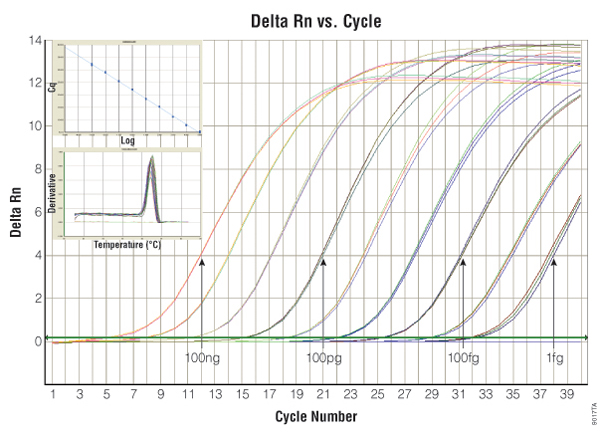
The GoTaq® 2-Step RT-qPCR System facilitates detection and relative quantification of RNA expression levels via a two-step RT-qPCR method using GoScript™ Reverse Transcription System and GoTaq® qPCR Master Mix.
The GoTaq® qPCR Master Mix is provided as a ready-to-use, stabilized 2X formulation and contains GoTaq® Hot Start Polymerase, MgCl2, dNTPs, BRYT Green® Dye and a proprietary reaction buffer. This master mix contains a low level of carboxy-X-rhodamine (CXR); a separate tube of CXR reference dye is included.
The GoScript™ Reverse Transcription System includes an optimized reaction buffer and M-MLV reverse transcriptase designed to enable efficient synthesis of first-strand cDNA in preparation for PCR amplification. The cDNA product can be added directly to downstream qPCR amplification reactions.
| Cat.# | Size | 10µl Reactions | 20µl Reactions |
|---|---|---|---|
| A6010 | 5ml | 50 × 20µl RT reactions and 1,000 × 10µl qPCR reactions | 50 × 20µl RT reactions and 500 × 20µl qPCR reactions |
For further information, use our comprehensive qPCR Data Selector to compare results generated using the GoTaq® qPCR Systems.
Suitable for Different Organisms and Sample Types
DNA/RNA isolated from the following organisms and sample types has been used with GoTaq® qPCR Systems. DNA/RNA from organisms and sample types not listed may also be compatible—please enquire with Promega technical support for additional compatibility.
Organism Types:
- Animal
- Bacteria
- Fungi
- Human
- Parasites
- Viruses
- Yeast
Sample Types:
- Blood
- Cells
- Feces
- FFPE
- Food
- Human Cerebrospinal Fluid (CSF)
- Plants
- Plasma
- Saliva
- Serum
- Sputum
- Swabs
- Tissue
- Urine
Compatible with These Instruments
For further details on instrument compatibility, please reference the appropriate Technical Manual. Instruments not listed may also be compatible—please enquire with Promega technical support for additional compatibility.
- Analytik Jena qTOWERiris PCR thermal cycler
- Applied Biosystems ABI PRISM® 7000 and 7700 Sequence Detection System
- Applied Biosystems 7300 and 7900HT Real-Time PCR System
- Applied Biosystems GeneAmp® 5700 Thermal Cycler
- Applied Biosystems StepOne™ and StepOnePlus™ Real-Time PCR Systems
- Applied Biosystems 7500 and 7500 FAST Real-Time PCR System
- Applied Biosystems ViiA® 7 Real-Time PCR System
- Applied Biosystems QuantStudio® Real Time PCR Systems
- Bio-Rad CFX96 Real-Time PCR Detection System
- Bio-Rad DNA Engine Opticon® and Opticon® 2 Real Time PCR Detection Systems
- Bio-Rad iCycler® iQ™ and iQ™ 5 Real-Time PCR Detection System
- Bio-Rad/MJ Research Chromo4™ Real-Time Detector
- Bio-Rad MyiQ™ Real-Time PCR Detection System
- Cepheid SmartCycler® System
- Corbett Rotor-Gene™ 3000 and 6000 Real-Time Rotary Analyzer
- Eppendorf Mastercycler® ep realplex Real-Time PCR System
- Roche LightCycler® 480 Real-Time PCR System
- Stratagene Mx3000P® and Mx3005P® Real-Time PCR Systems
- Stratagene Mx4000® Multiplex Quantitative PCR System

Performance Guarantee: Promega PCR systems, enzymes and reagents are proven in PCR to ensure reliable, high-performance results. If you are not completely satisfied with any Promega PCR product, we will send a replacement or refund your account.
Protocols
Complete Protocol
Quick Protocols
Frequently Asked Questions
What are common PCR inhibitors and how do they affect qPCR?
Common PCR inhibitors include heme (blood samples), humic acids (soil/plant material), phenol and ethanol residues from nucleic acid extraction, EDTA, and detergents. Inhibitors can reduce polymerase activity, quench fluorescence, or both. Inhibitor effects in qPCR typically manifest as elevated Cq values and reduced amplification efficiency, abnormal amplification curves, or total failure to amplify. The severity depends on inhibitor concentration, sample matrix and master mix formulation.
GoTaq® master mixes use GoTaq® Hot Start Polymerase with a proprietary reaction buffer and optimized MgCl₂ concentration for robust performance across sample types. When working with samples likely to contain inhibitors (e.g., clinical specimens, environmental extracts, food matrices), recommended first steps include diluting the template, optimizing the RNA or DNA purification method, and validating extraction efficiency with a spike-in control. The Maxwell® RSC automated purification systems are designed to reduce inhibitor carryover for qPCR, compared to manual column-based methods.
Can I use GoTaq® qPCR Master Mix for RT-qPCR?
No. GoTaq® qPCR Master Mix (Cat.# A6001/A6002) is formulated for DNA templates and does not contain reverse transcriptase. For RNA quantification, use the GoTaq® 1-Step RT-qPCR System (Cat.# A6020) for a streamlined single-tube workflow, or the GoTaq® 2-Step RT-qPCR System (Cat.# A6010) when you need to optimize RT and PCR steps independently or archive cDNA.
What real-time PCR instruments are compatible with GoTaq® qPCR Master Mix?
GoTaq® qPCR Master Mix is compatible with most real-time PCR instruments. A complete list of compatible instruments is provided in Technical Manual #TM318.
Why does dye-based qPCR require melt-curve analysis?
SYBR® Green and BRYT Green® dyes intercalate into all double-stranded DNA, including primer dimers and nonspecific amplification products. A melt-curve analysis after cycling identifies each product by its unique melting temperature, distinguishing specific amplicons from artifacts. Probe-based qPCR does not require this step because fluorescence signal is generated only when the sequence-specific probe hybridizes to its target and is cleaved by Taq polymerase’s 5′ nuclease activity.
How much template should I use per GoTaq® reaction?
Template requirements depend on which GoTaq® System you are using. For the GoTaq® qPCR Master Mix (DNA template), optimize template amount based on target abundance and sample concentration. For the 1-Step RT-qPCR System, the recommended starting point is 100ng of total RNA per reaction; high-copy targets may be detected from as little as 500fg, while low-copy targets may require the full 100ng maximum input (see Technical Manual #TM355). For the 2-Step RT-qPCR System, up to 5µg of RNA can be used in the 20µl RT reaction; the resulting cDNA should not exceed 20% (v/v) of the downstream qPCR volume unless diluted prior to use (see Technical Manual #TM337).
What is BRYT Green® Dye and why is it used instead of SYBR® Green I?
BRYT Green® Dye is a proprietary double-stranded DNA-binding fluorescent dye. It provides greater fluorescence enhancement upon binding to dsDNA compared to SYBR® Green I, potentially improving sensitivity for low-abundance targets. Because BRYT Green® Dye has similar excitation and emission wavelengths to SYBR® Green I, no instrument reconfiguration is needed when adopting GoTaq® Systems in labs that currently use SYBR® Green reagents.
Specifications
Catalog Number:
What's in the box?
| Item | Part # | Size | Available Separately |
|---|---|---|---|
|
GoTaq® qPCR Master Mix, 2X |
A600A | 5 × 1ml | View Product |
|
CXR Reference Dye |
C541A | 1 × 100μl | View Product |
|
Nuclease-Free Water |
P119E | 2 × 13ml | View Product |
SDS
Search for SDSCertificate of Analysis
Use Restrictions
For Research Use Only. Not for Use in Diagnostic Procedures.Storage Conditions
U.S. Pat. Nos. 8,598,198 and 9,206,474 and other patents and patents pending.
What's in the box?
| Item | Part # | Size | Available Separately |
|---|---|---|---|
|
GoTaq® qPCR Master Mix, 2X |
A600A | 25 × 1ml | View Product |
|
CXR Reference Dye |
C541A | 5 × 100μl | View Product |
|
Nuclease-Free Water |
P119E | 10 × 13ml | View Product |
SDS
Search for SDSCertificate of Analysis
Use Restrictions
For Research Use Only. Not for Use in Diagnostic Procedures.Storage Conditions
U.S. Pat. Nos. 8,598,198 and 9,206,474 and other patents and patents pending.
What's in the box?
| Item | Part # | Size | Concentration | Available Separately |
|---|---|---|---|---|
|
MgCl2 |
A351B | 1 × 750μl | 25mM | View Product |
|
GoTaq® qPCR Master Mix, 2X |
A600A | 5 × 1ml | View Product | |
|
Nuclease-Free Water |
P119E | 2 × 13ml | View Product | |
|
CXR Reference Dye |
C541B | 1 × 200μl | 30μM | View Product |
|
GoScript™ RT Mix for 1-Step RT-qPCR |
M700A | 1 × 225μl | 50X |
SDS
Search for SDSCertificate of Analysis
Use Restrictions
For Research Use Only. Not for Use in Diagnostic Procedures.Storage Conditions
U.S. Pat. Nos. 8,598,198 and 9,206,474 and other patents and patents pending.
What's in the box?
| Item | Part # | Size | Concentration | Available Separately |
|---|---|---|---|---|
|
MgCl2 |
A351B | 1 × 750μl | 25mM | View Product |
|
GoScript™ 5X Reaction Buffer |
A500B | 1 × 300μl | View Product | |
|
GoScript™ Reverse Transcriptase |
A501B | 1 × 50μl | ||
|
GoTaq® qPCR Master Mix, 2X |
A600A | 5 × 1ml | View Product | |
|
Oligo(dT)15 Primer |
C110B | 1 × 50μg | 500μg/ml | View Product |
|
PCR Nucleotide Mix |
C114G | 1 × 200μl | 10mM | View Product |
|
Random Primers |
C118B | 1 × 50μg | View Product | |
|
CXR Reference Dye |
C541A | 1 × 100μl | View Product | |
|
Recombinant RNasin® Ribonuclease Inhibitor |
N251A | 1 × 2,500u | 40u/μl | View Product |
|
Nuclease-Free Water |
P119E | 2 × 13ml | View Product |
SDS
Search for SDSCertificate of Analysis
Use Restrictions
For Research Use Only. Not for Use in Diagnostic Procedures.Storage Conditions
U.S. Pat. Nos. 8,598,198 and 9,206,474 and other patents and patents pending.
Compare Products
|
GoTaq® qPCR Master Mix Dye-Based qPCR |
GoTaq® 1-Step RT-qPCR System Dye-Based 1-Step RT-qPCR |
GoTaq® 2-Step RT-qPCR System Dye-Based 2-Step RT-qPCR |
GoTaq® Probe qPCR Master Mix Probe-Based qPCR |
GoTaq® Probe 1-Step RT-qPCR System Probe-Based 1-Step RT-qPCR |
GoTaq® Probe 2-Step RT-qPCR System Probe-Based 2-Step RT-qPCR |
|
|---|---|---|---|---|---|---|
| Cat. # | A6001, A6002 | A6020 | A6010 | A6101, A6102 | A6120, A6121 | A6110 |
| Best Use | General DNA quantification with dye-based chemistry | Fast detection of RNA expression levels in a single reaction; minimal hands-on time | Detection of RNA expression with independent RT and PCR optimization; cDNA available for other assays | Sequence-specific DNA quantification; multiplexing possible | Single-tube RNA quantification with probe specificity; high-throughput workflows | Probe-based RNA quantification with separate RT and PCR optimization; cDNA available for other assays |
| Key Decision Points | ||||||
| Template Type | DNA | RNADirect RNA input; no separate cDNA step | RNASeparate cDNA synthesis then qPCR | DNA | RNADirect RNA input; no separate cDNA step | RNASeparate cDNA synthesis then qPCR |
| Detection Chemistry | BRYT Green® DyedsDNA-binding dye (similar to SYBR® Green I) | BRYT Green® DyedsDNA-binding dye (similar to SYBR® Green I) | BRYT Green® DyedsDNA-binding dye (similar to SYBR® Green I) | Hydrolysis Probeuser supplies probe | Hydrolysis Probeuser supplies probe | Hydrolysis Probeuser supplies probe |
| Multiplexing? | ✗ NoSingle dye channel; one target per well | ✗ NoSingle dye channel; one target per well | ✗ NoSingle dye channel; one target per well | ✓ YesMultiple probes with distinct fluorophores | ✓ YesMultiple probes with distinct fluorophores | ✓ YesMultiple probes with distinct fluorophores |
| Melt-curve analysis required? | YesNeeded to confirm amplicon specificity | YesNeeded to confirm amplicon specificity | YesNeeded to confirm amplicon specificity | Not requiredProbe provides sequence specificity | Not requiredProbe provides sequence specificity | Not requiredProbe provides sequence specificity |
| Workflow Steps | 1 stepAdd DNA → cycle | 1 stepAdd RNA → RT + qPCR in one tube | 2 stepsStep 1: cDNA synthesis; Step 2: qPCR | 1 stepAdd DNA → cycle | 1 stepAdd RNA → RT + qPCR in one tube | 2 stepsStep 1: cDNA synthesis; Step 2: qPCR |
| Includes reverse transcriptase? | ✗ No | ✓ YesGoScript™ RT Mix | ✓ YesGoScript™ RT | ✗ No | ✓ YesGoScript™ RT Mix | ✓ YesGoScript™ RT |
| Assay Attributes | ||||||
| CXR reference dye in master mix? | ✓ Yes (low level)Supplemental CXR included for instruments that require high levels of reference dye | ✓ Yes (low level)Supplemental CXR included for instruments that require high levels of reference dye | ✓ Yes (low level)Supplemental CXR included for instruments that require high levels of reference dye | ✗ NoSeparate CXR tube included to add if desired; add per instrument needs | ✗ NoSeparate CXR tube included to add if desired; add per instrument needs | ✗ NoSeparate CXR tube included to add if desired; add per instrument needs |
| Hot-start chemistry | ✓ GoTaq® Hot Start Polymerase | ✓ GoTaq® Hot Start Polymerase | ✓ GoTaq® Hot Start Polymerase | ✓ GoTaq® Hot Start Polymerase | ✓ GoTaq® Hot Start Polymerase | ✓ GoTaq® Hot Start Polymerase |
| dUTP/UNG carryover prevention? | ✗ No | ✗ No | ✗ No | ✗ No | ✓ YesMaster mix contains dUTP; UNG-compatible | ✗ No |
| Template & Protocol | ||||||
| Standard reaction volume | 20µl | 20µl | 20µl RT + 20µl qPCR | 20µl | 20µl | 20µl RT + 20µl qPCR |
| Fast cycling available? | ✓ Yes | ✗ No | ✓ Yes | ✓ Yes | ✓ Yes | ✓ Yes |
| Ordering Information | ||||||
| Cat. # | A6001 (5ml) A6002 (25ml) |
A6020 (5ml) | A6010 (5ml) | A6101 (2ml) A6102 (10ml) |
A6120 (2ml) A6121 (12.5ml) |
A6110 (2ml) |
| Reactions per kit (20µl) | 500 (A6001) 2,500 (A6002) |
500 | 500 qPCR + 50 RT | 200 (A6101) 1,000 (A6102) |
200 (A6120) 1,250 (A6121) |
200 |
| Technical manual | TM318 | TM355 | TM337 | TM378 | TM379 | TM380 |
Similar Products
Frequently Used With
Molecular Biology Lab Guide
A resource designed for scientists just embarking on their career, focusing on fundamental technologies and techniques.
GEN1978
M-MLV Reverse Transcriptase, RNase H Minus
Helpful for preparing long cDNAs and libraries with a high percentage of full-length cDNA.
M5301
PureYield™ Plasmid Maxiprep System
1mg of transfection-ready plasmid from 250ml cultures in 1 hour.
A2392, A2393
SV Total RNA Isolation System
Simple spin or vacuum-based method to extract total RNA from tissues, cultured cells and white blood cells.
Z3100, Z3105